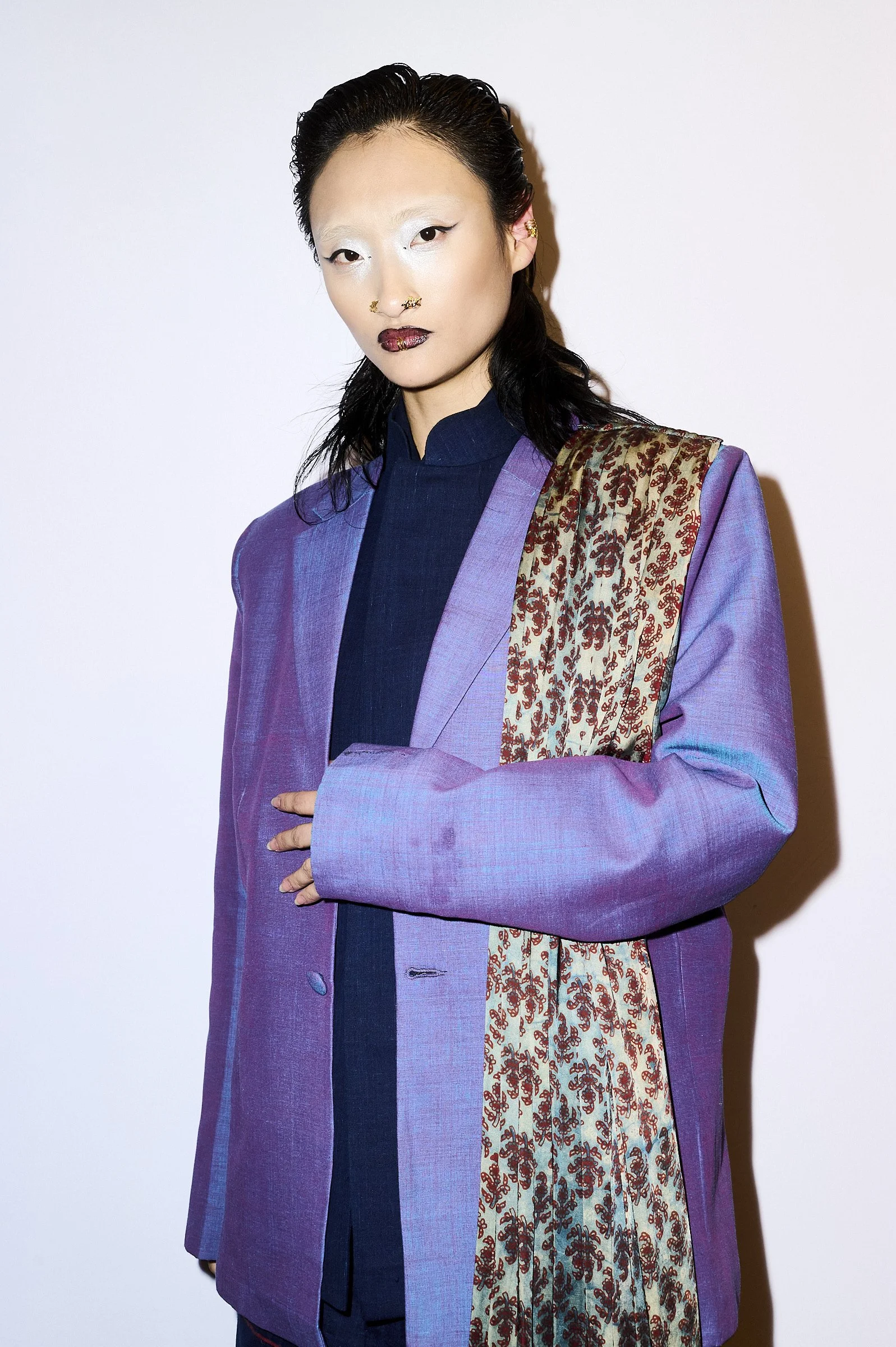
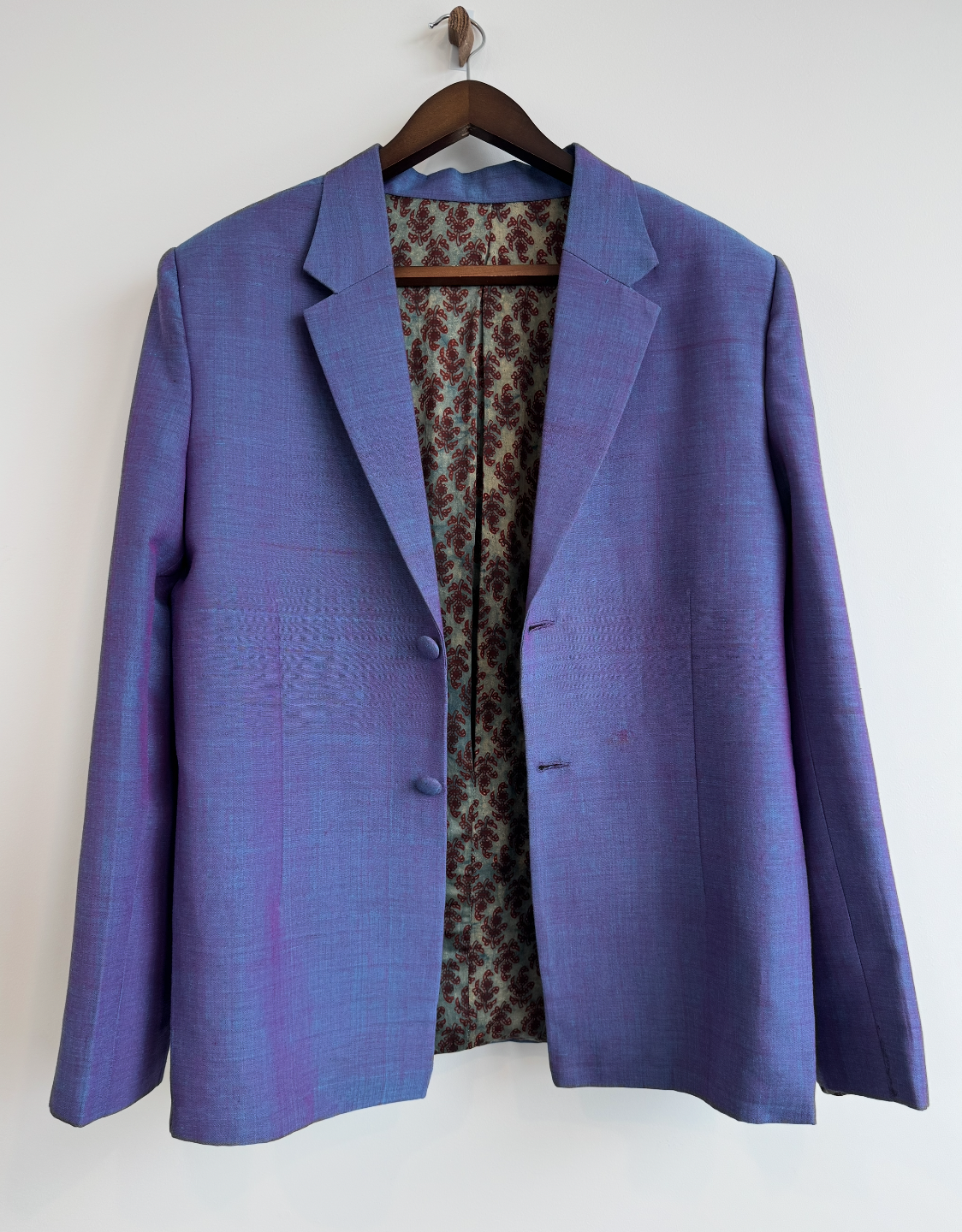
TWIN SHADE DRAPE JACKET
Crafted from 100% handspun, handwoven Mangalgiri cotton, featuring a detachable drape and fabric buttons.
Dry clean only
Size Medium - $959.00 AUD
Photographed by Gemma Thomas
The dhoop-chhaon effect, or "sun and shade," represents a pinnacle of the traditional Indian handloom weaving that once established India as the world's premier manufacturer, responsible for approximately 25 percent of the planet’s entire industrial output before the mid-1700s. This technique creates a ‘living texture’ by blending different colored warp and weft threads, producing a shifting tone that captures the weaver’s mastery over light and shadow rather than relying on machine-like uniformity.
Historically, these fine cottons and silks were prized for their "quiet sophistication" and were in high demand across global markets, worn by everyone from the Persian elite to French aristocrats—long before British colonial policies forced a de-industrialization of the Indian economy. Despite the monopolistic control and dictated prices imposed by the East India Company, which stripped weavers of their free labor and forced them into debt, the dhoop-chhaon tradition survived as a symbol of artistry and resilience.
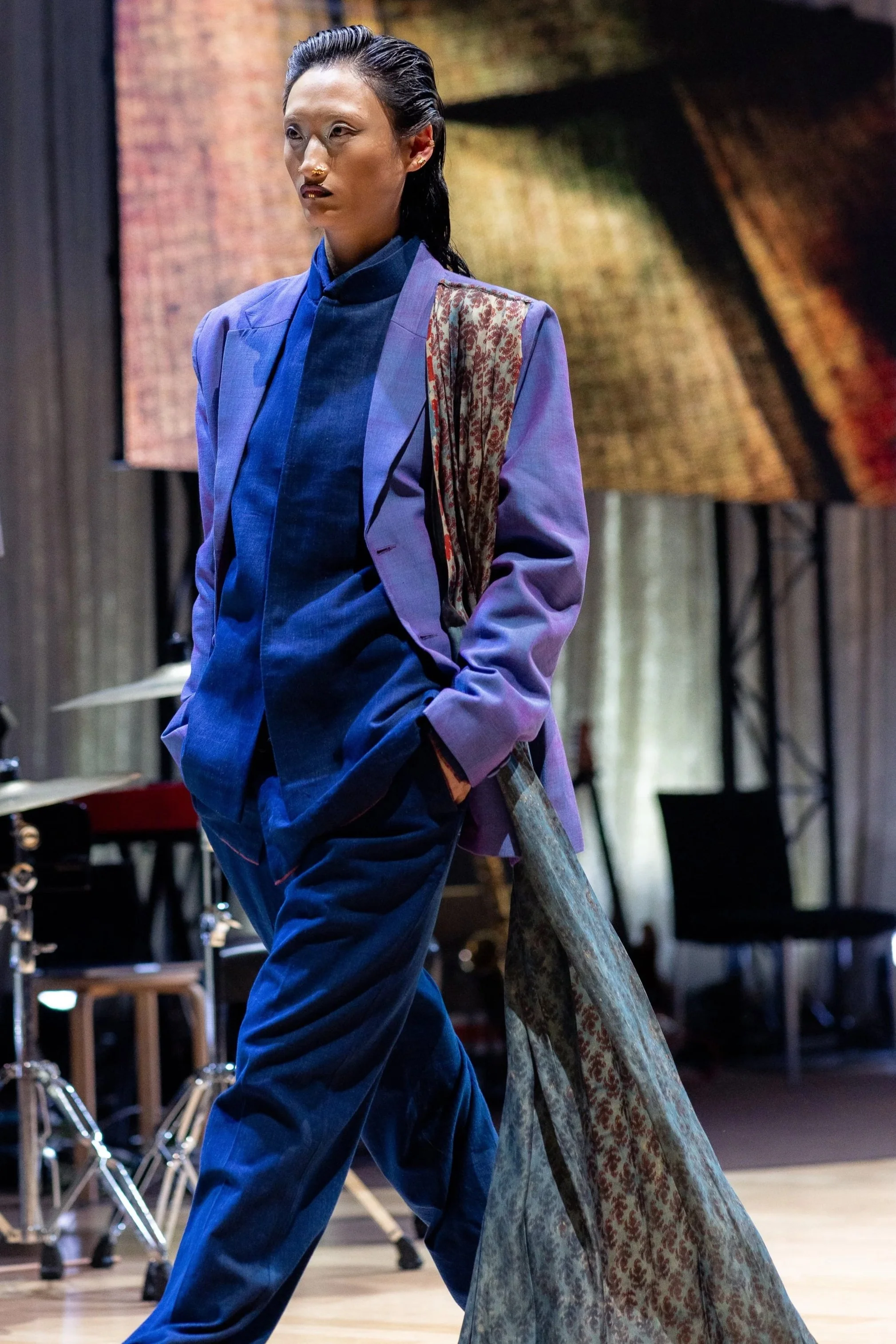
Photographed by Gemma Thomas
© Antiek East
A detachable drape designed for those who value versatile styling and deep storytelling. Effortlessly taking your look from evening dinners to grand events
Crafted from fluid, flowing Modal silk, a regenerated, plant-based fibre. This drape feels light, soft, and luxurious against the skin. Its natural sheen and elegant movement enhance every fold, allowing the piece to adapt seamlessly to any occasion while celebrating sustainable, conscious craftsmanship.
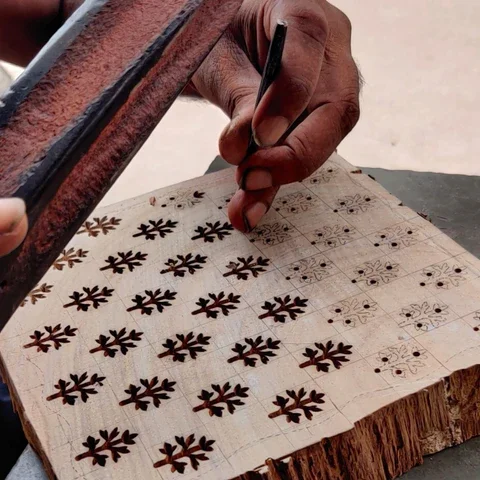
Sourced from Decor Mantra
Hand-block printing represents a centuries-old "gaze" through which India has observed global trade, from the height of the Mughal Empire to the modern day. Historically, these fine patterned textiles were in such high demand that they were worn by French aristocrats and sought after from Persia to China. Even as the British East India Company worked to transform India from a textile manufacturer into a supplier of raw materials, the intricate skill of the block-printer remained a symbol of nationalist pride.
Crafted on fluid Modal silk, our drapes are printed using this very technique. The subtle variations in the motifs celebrate the humanity of the craft, serving as a "nod to architectural and artistic influence" that preceded the era of colonial monopolies. By blending this ancient stamping tradition with contemporary silhouettes, we ensure that the essence of India’s artisan heritage is lived in every piece.
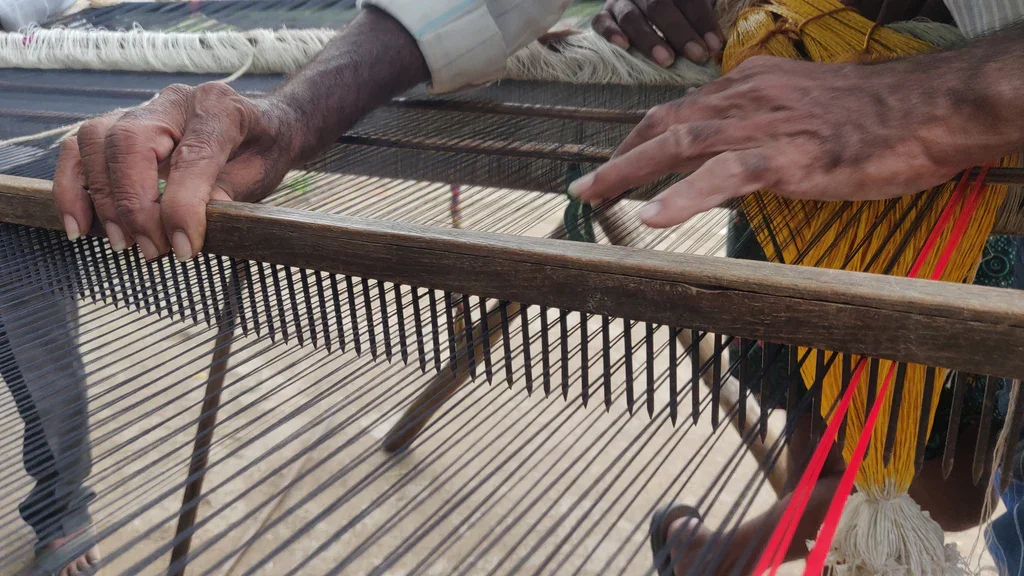
Sourced from thisisassal.com
Mangalgiri cotton, originating from the town of Mangalagiri in Andhra Pradesh, is a living representative of an Indian textile legacy that, before 1750, made India the most important manufacturer in the world. Woven for centuries by skilled local artisans and traditionally patronized by temples, this fabric is celebrated for its durability and its distinctive Nizam border.
When British colonial policies shifted India from being a premier exporter of finished clothing to a supplier of raw materials. While the East India Company once used political power to dictate terms to weavers and force them into non-free labor, the artisans of Mangalagiri preserved their craft. Today, the fabric's tight weave, subtle sheen, and breathable quality stand as a testament to human skill over machine uniformity.