

CITRUS GREEN DUAL COLLAR BLAZER
Crafted from 100% handspun & handwoven Khadi cotton, with a Modal silk purple lining.
Dry clean only
Size Medium - $549.00 AUD
Photographed by Gemma Thomas
The double collar and dual flap designs represent the intellectual and noble layers of a society that, even while being transformed into an economic colony, maintained a profound zeal for independence. This piece honors the legacy of a culture where textiles were not merely attire, but a visual discourse of status and a marker of national identity.
Crafted from 100% handspun and handwoven Khadi cotton, this blazer is a tribute to the "fabric of Indian independence". Mahatma Gandhi championed this cloth to reclaim self-reliance and reject the factory-made British textiles that had previously flooded Indian markets and displaced local handicraftsmen.
Timeless yet distinctive, this piece stands apart by reclaiming India’s "proud industrial past". It honors a heritage of slow, conscious dressing where every thread is a "material embodiment of an ideal," connecting the modern wearer to a thousand-year-old tradition of artisan excellence


Photographed by Gemma Thomas
Photographed by Gemma Thomas
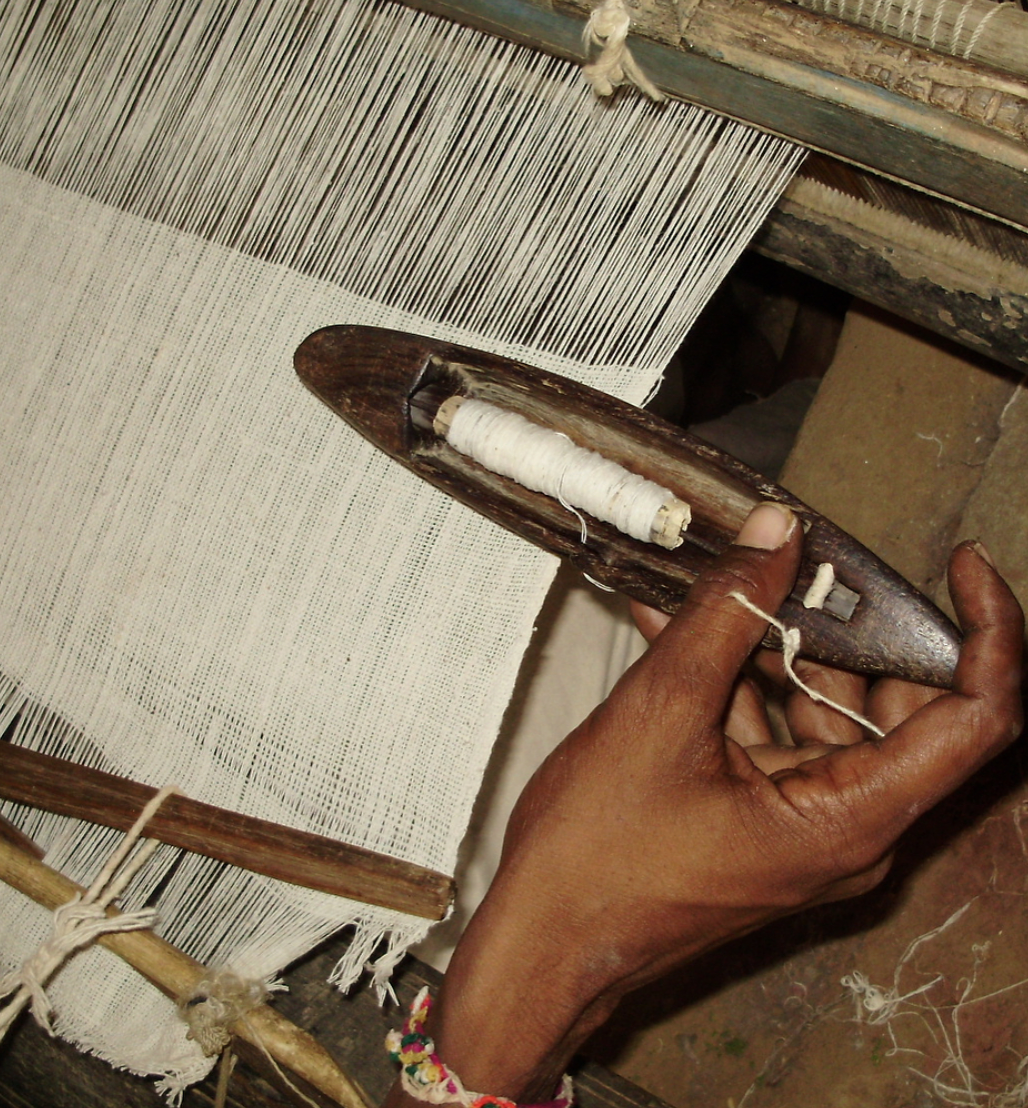
Sourced from fashionrevolution.org
Khadi is a handspun and handwoven fabric that represents the resilience of an Indian textile legacy. Mahatma Gandhi famously championed Khadi as the "fabric of Indian independence," urging citizens to boycott factory-made British goods and adopt "homespun cloth" as a profound act of self-reliance and cultural defiance.
This fabric is celebrated for its unique texture, breathability, and "living" quality, with each piece bearing the individual touch of the artisan, roughly 70 percent of whom are women. Today, Khadi bridges India's proud industrial past with modern sustainable design, serving as a social equalizer that values character over appearance and ethical craftsmanship over mass production.
By promoting the use of the spinning wheel (charkha), Gandhi sought to revitalize rural employment and restore autonomy to village communities that had been decimated by the monopolistic control and "dictated prices" of the colonial era. Beyond its political weight, Khadi embodies a philosophy of slow, mindful making, where the entire process—from picking cotton by hand to spinning and weaving—serves as a return to essentials and a distinct "art de vivre"