
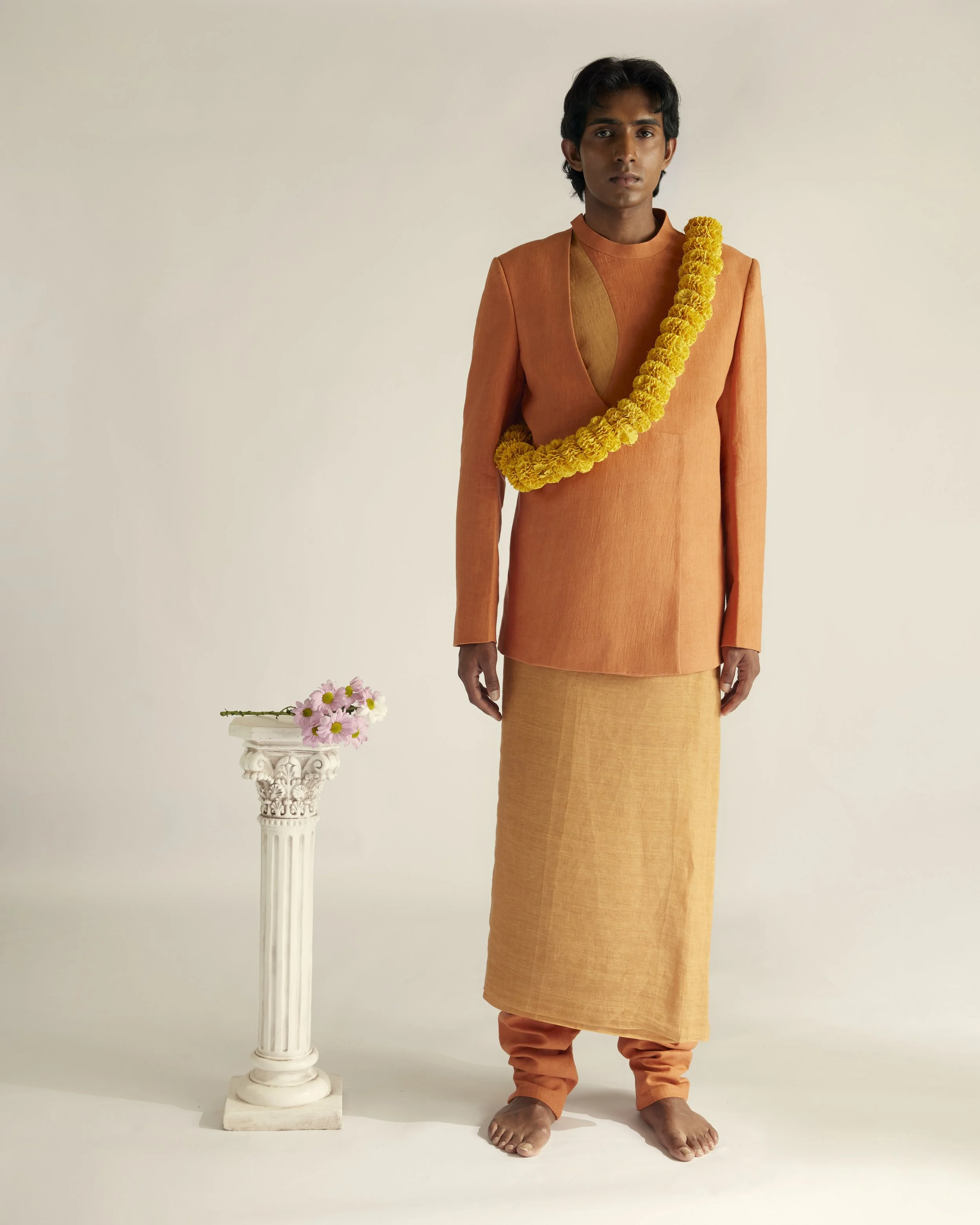
MARIGOLD ANGRAKHA BLAZER
Crafted from 100% handspun & handwoven Khadi cotton, with a 100% silk lining and hook & eye closure
Size Medium - $489.00 AUD
Photographed by Suleiman Thomas
The Angrakha silhouette, with its origins in the royal courts of the Mughal era was worn by kings, nobles, and courtiers, this garment—characterized by asymmetrical, overlapping panels, was traditionally crafted from the fine cottons, silks, and Kashmir cloth that were in high demand globally, from the markets of Persia to the aristocrats of France.
Traditionally constructed from fine cotton, silks, and brocades, the Angrakha was worn across a wide social and geographic spectrum, ranging from courtly attire to ceremonial and festive dress. Over time, variations emerged in its length, volume, and decorative treatment, reflecting regional preferences while consistently maintaining its characteristic wrap-around construction.
Beyond its visual and material qualities, the Angrakha functioned as a marker of status, refinement, and cross-cultural exchange. Its sustained presence within the history of Indian dress demonstrated a successful synthesis of functionality and ornamentation, establishing it as one of the most enduring and recognisable silhouettes in the subcontinent’s sartorial tradition.
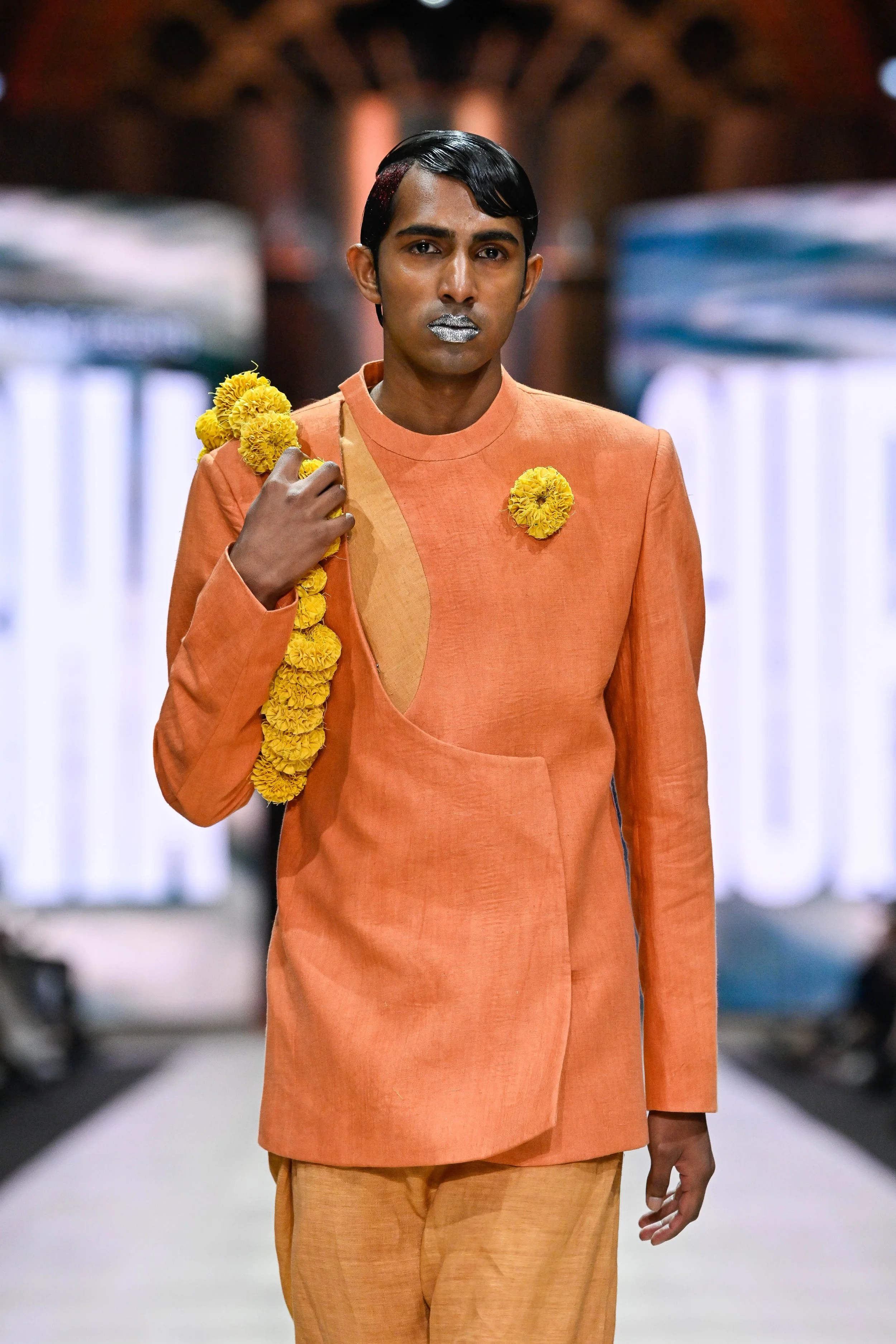
Photographed by PayPal MFF
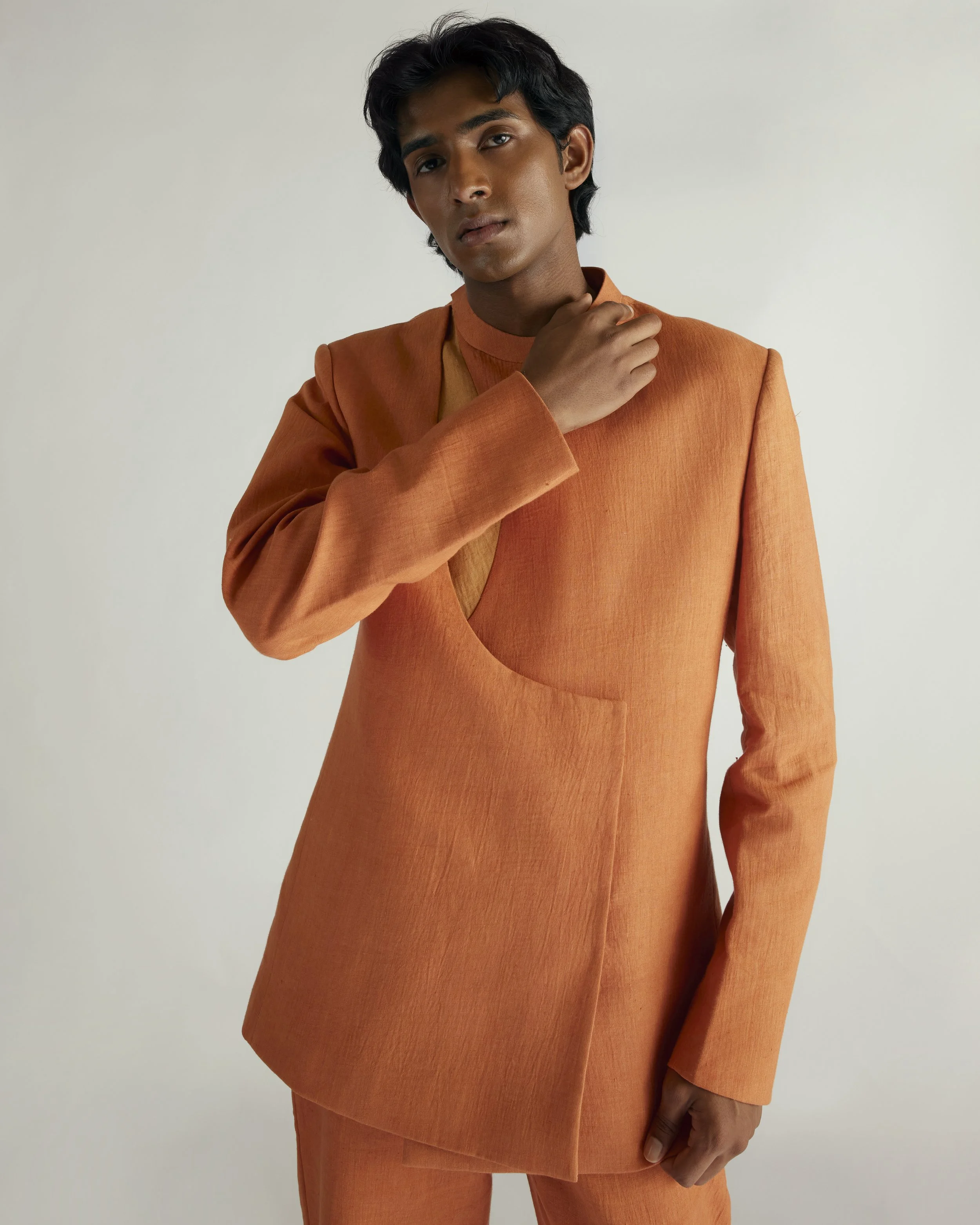
Photographed by Suleiman Thomas
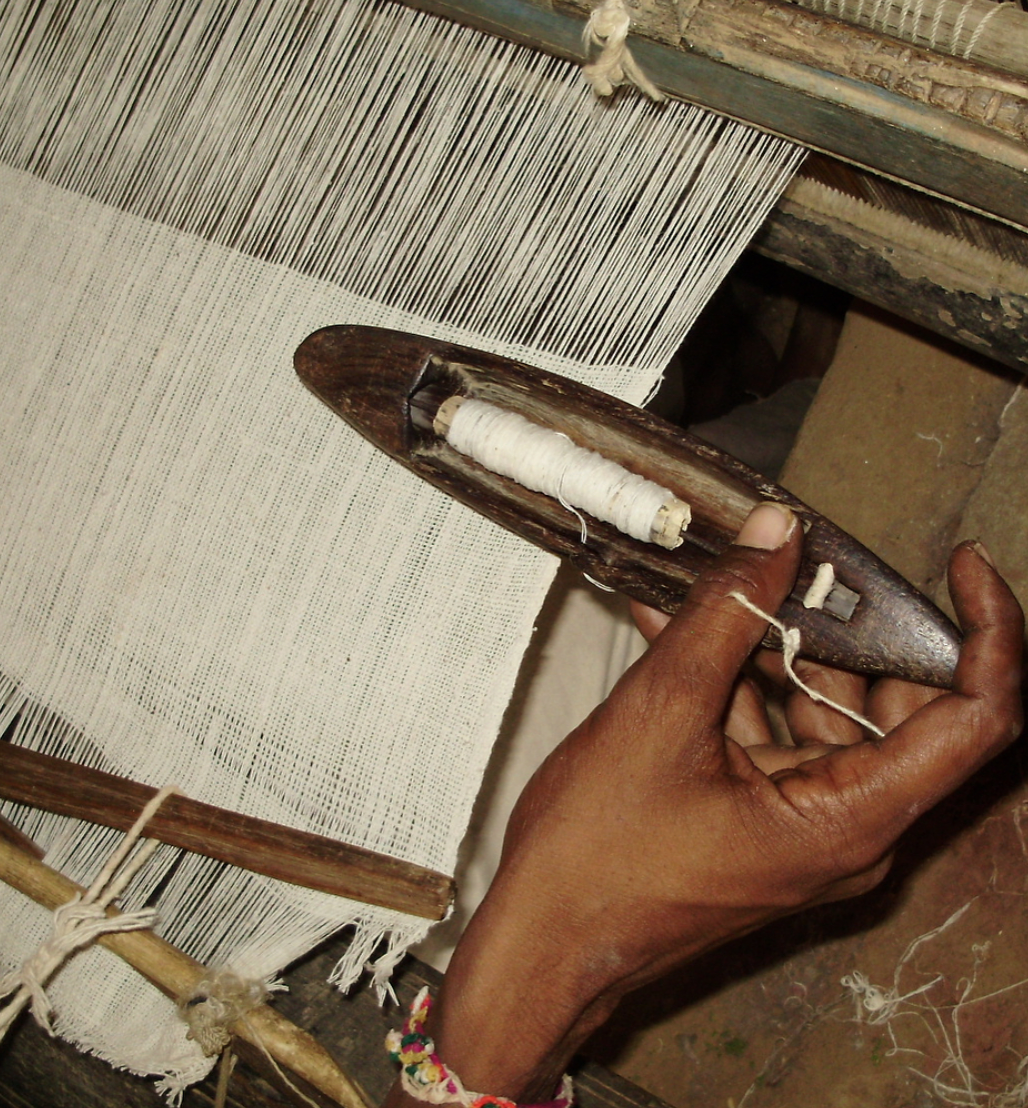
Sourced from fashionrevolution.org
Khadi is a handspun and handwoven fabric that represents the resilience of an Indian textile legacy. Mahatma Gandhi famously championed Khadi as the "fabric of Indian independence," urging citizens to boycott factory-made British goods and adopt "homespun cloth" as a profound act of self-reliance and cultural defiance.
This fabric is celebrated for its unique texture, breathability, and "living" quality, with each piece bearing the individual touch of the artisan, roughly 70 percent of whom are women. Today, Khadi bridges India's proud industrial past with modern sustainable design, serving as a social equalizer that values character over appearance and ethical craftsmanship over mass production.
By promoting the use of the spinning wheel (charkha), Gandhi sought to revitalize rural employment and restore autonomy to village communities that had been decimated by the monopolistic control and "dictated prices" of the colonial era. Beyond its political weight, Khadi embodies a philosophy of slow, mindful making, where the entire process—from picking cotton by hand to spinning and weaving—serves as a return to essentials and a distinct "art de vivre"