
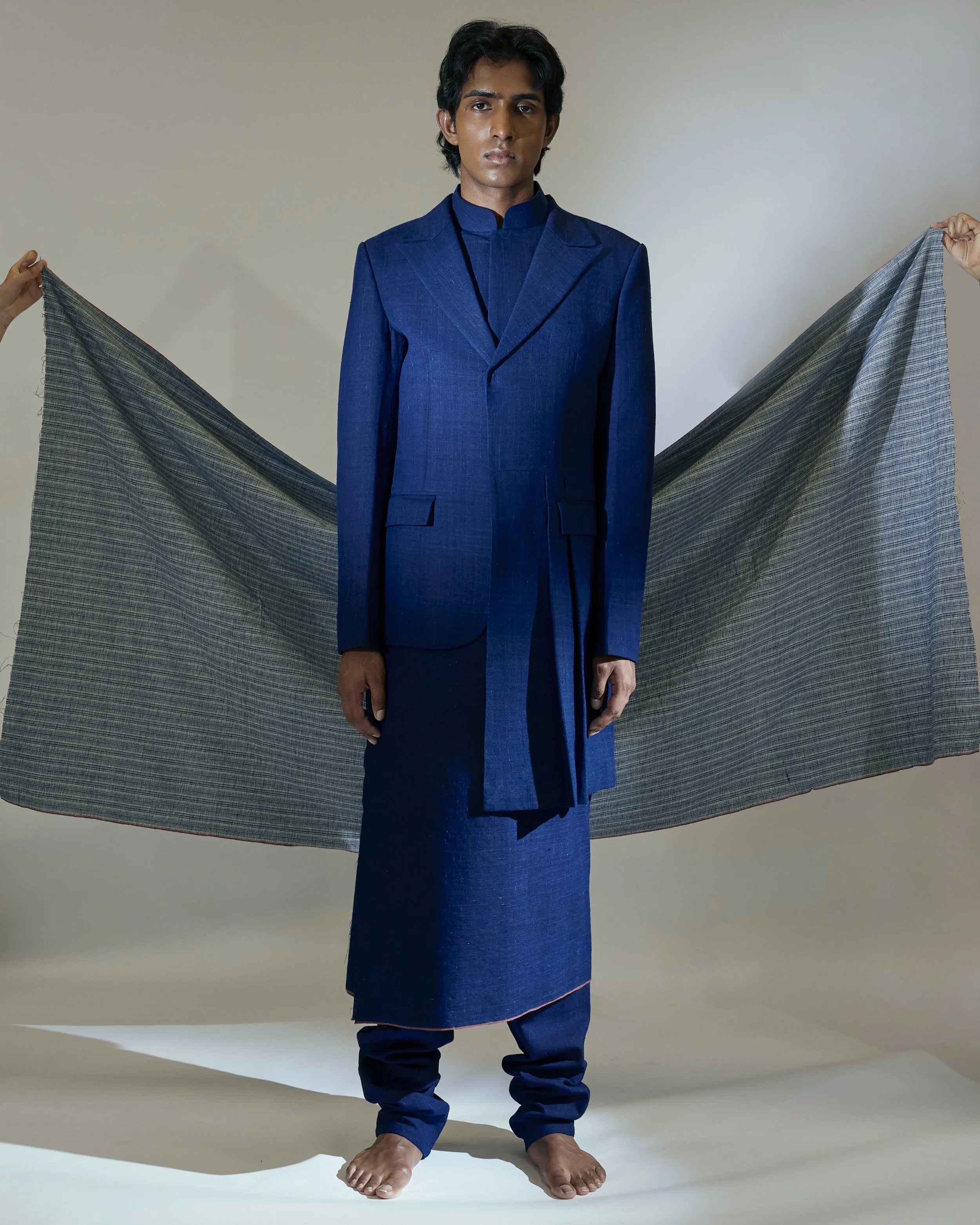
INDIGO BAGPIPER BLAZER
Crafted from 100% handspun & handwoven Khadi cotton, with a 100% silk lining.
Dry clean only
Size Medium - $589.00 AUD
SOLD OUT
Photographed by Suleiman Thomas
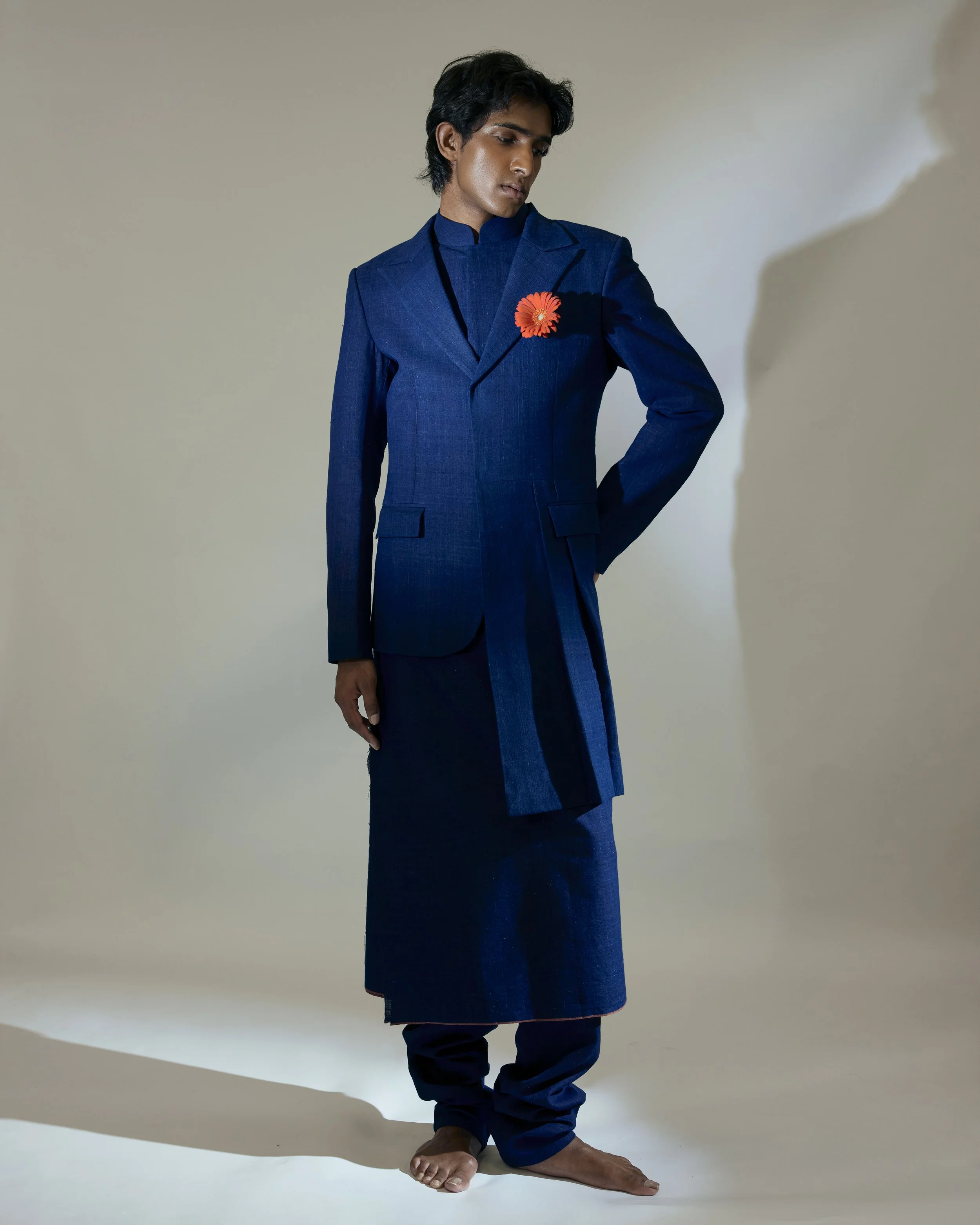
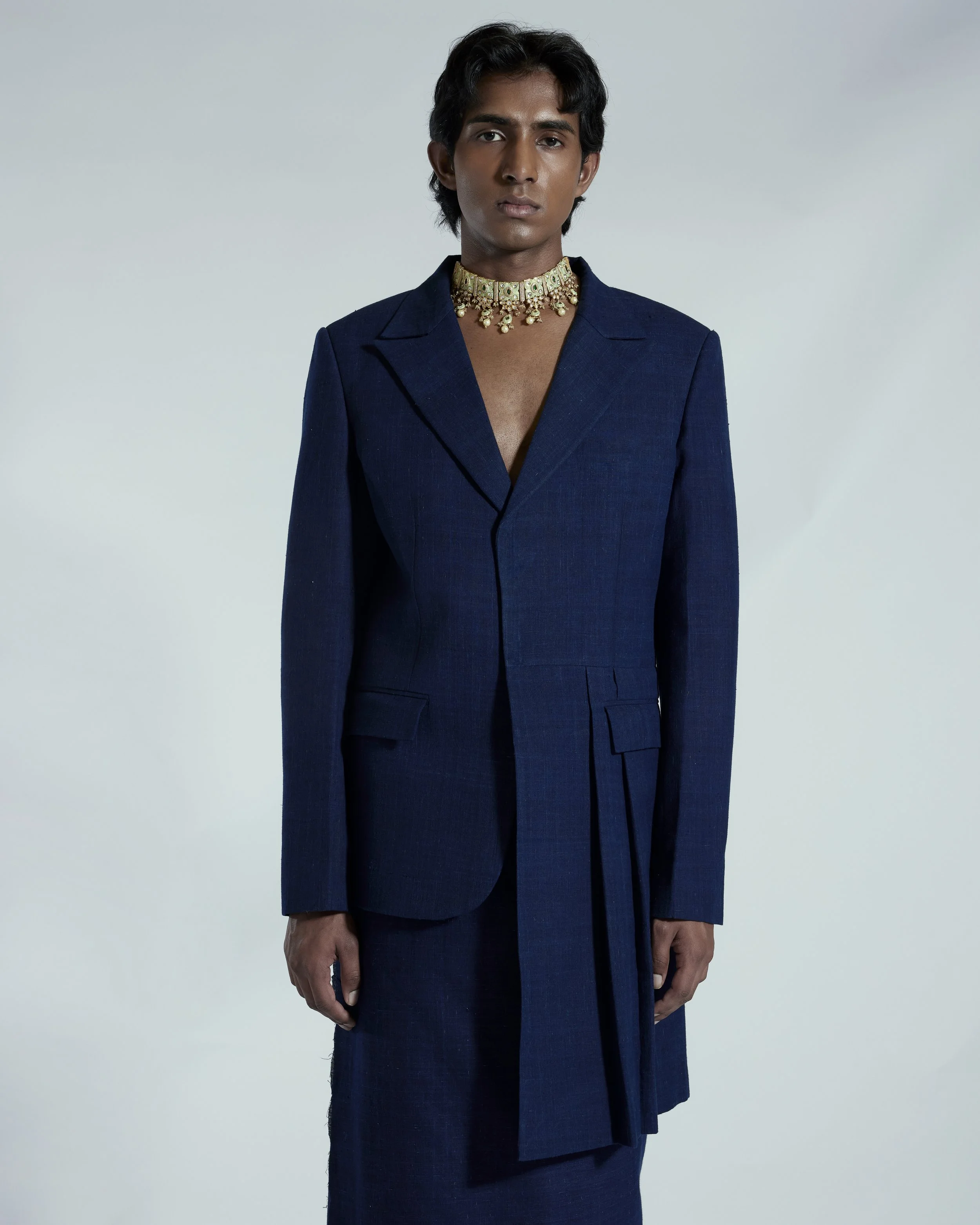
An expression of quiet opulence, the “Indigo Bagpiper Blazer" brings together heritage inspiration and contemporary refinement. Drawing from the ceremonial elegance of the Royal Guard bagpipers outside Buckingham Palace, the design reinterprets the distinctive kilt silhouette through a tailored lens, structured yet fluid, formal yet effortless.
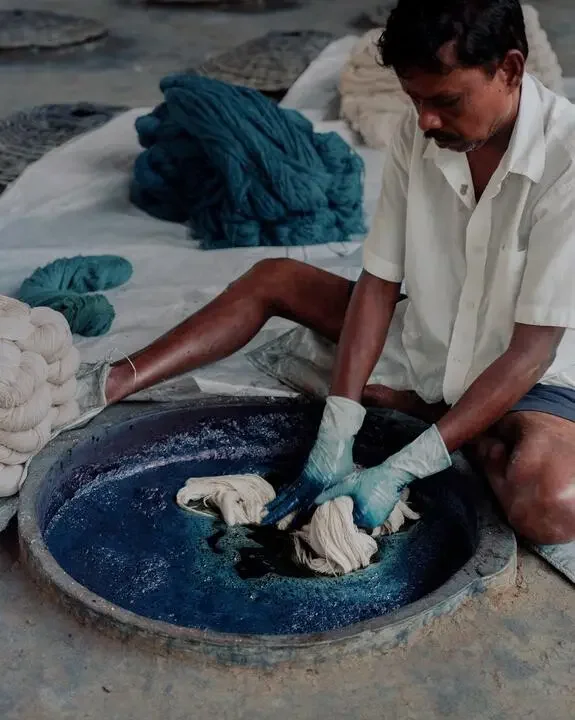
Handcrafted from 100% hand-spun and hand-woven light-weight Khadi cotton with natural Indigo dyeing, this blazer celebrates artisanal mastery and natural comfort. The breathable fabric lends itself to graceful movement, making it an ideal choice for occasions that demand polish without rigidity.
Every detail is considered. The interior is finished with a 100% silk lining, adding a hidden layer of craftsmanship that reveals itself only to the wearer. Subtle, elegant, and timeless, the Indigo Bagpiper Blazer embodies understated luxury, where global heritage meets conscious, slow fashion.
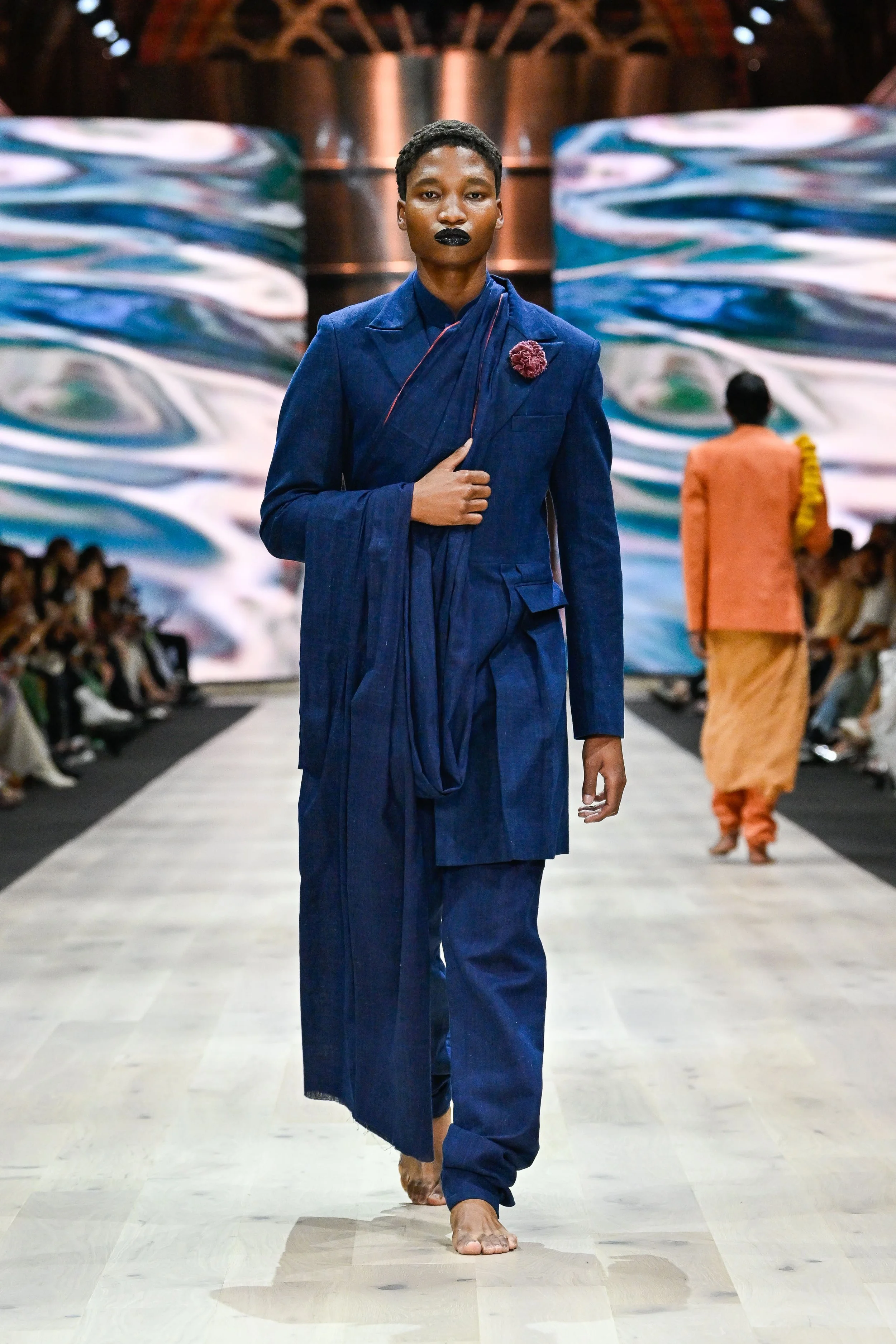
Photographed by PayPal MFF'
Photographed by Suleiman Thomas
Photographed by Suleiman Thomas
Sourced by Suitcase Magazine
Indigo holds a profound place in India’s textile and cultural history. Known as nila in Sanskrit, India was one of the world’s earliest and most significant producers of natural indigo, exporting the dye as early as the Indus Valley Civilisation (c. 2500 BCE)
For centuries, Indian indigo coloured textiles traded across Asia, the Middle East, and Europe, where it was prized for its deep, lasting blue.
During the colonial period, indigo cultivation took a darker turn. Under British rule, Indian farmers were forced to grow indigo instead of food crops, leading to exploitation and hardship, most notably the Indigo Revolt of 1859, a powerful early act of resistance against colonial oppression. Post-independence, natural indigo gradually declined with the rise of synthetic dyes, but today it is being consciously revived by artisans and designers committed to slow, sustainable practices.
Sourced from fashionrevolution.org
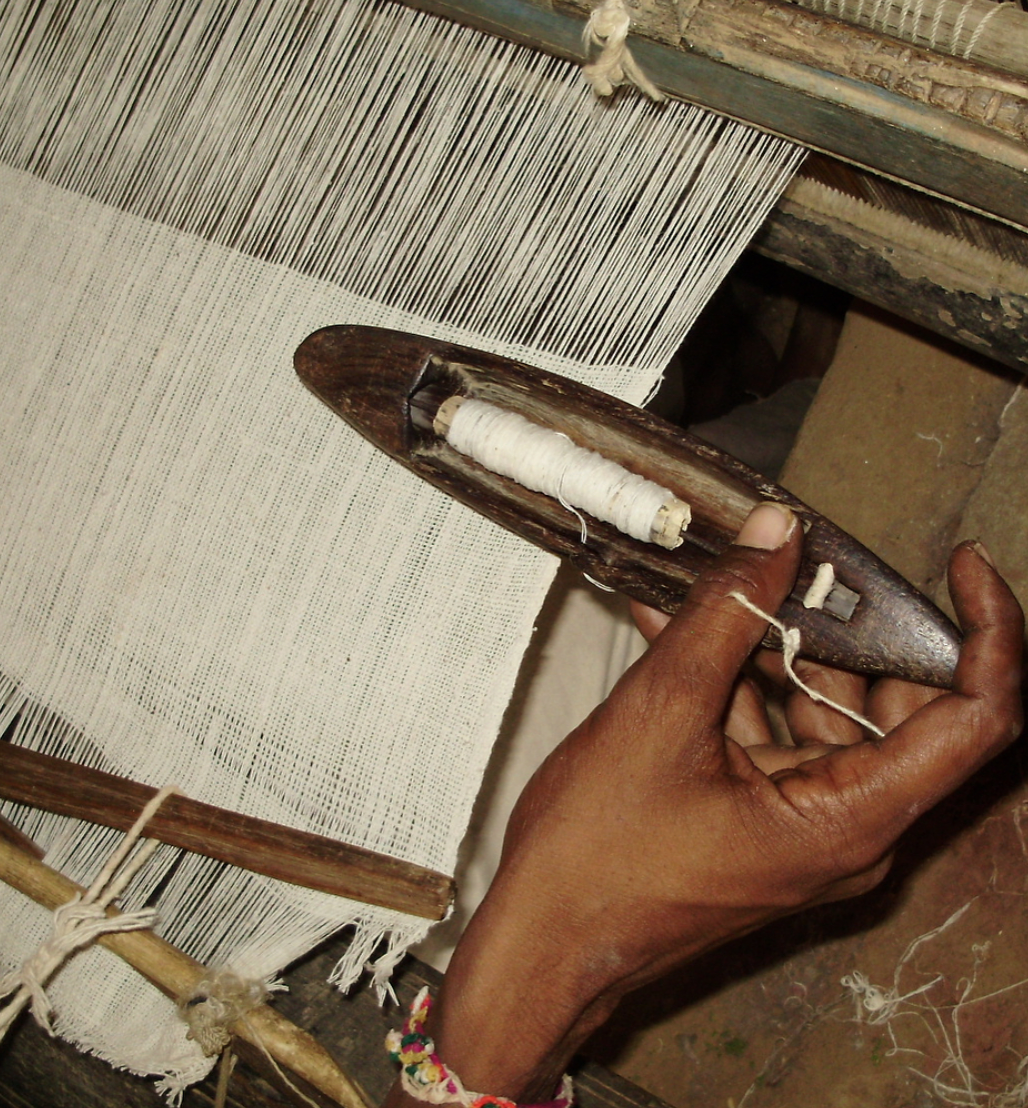
Khadi is a handspun and handwoven fabric that represents the resilience of an Indian textile legacy. Mahatma Gandhi famously championed Khadi as the "fabric of Indian independence," urging citizens to boycott factory-made British goods and adopt "homespun cloth" as a profound act of self-reliance and cultural defiance.
This fabric is celebrated for its unique texture, breathability, and "living" quality, with each piece bearing the individual touch of the artisan, roughly 70 percent of whom are women. Today, Khadi bridges India's proud industrial past with modern sustainable design, serving as a social equalizer that values character over appearance and ethical craftsmanship over mass production.
By promoting the use of the spinning wheel (charkha), Gandhi sought to revitalize rural employment and restore autonomy to village communities that had been decimated by the monopolistic control and "dictated prices" of the colonial era. Beyond its political weight, Khadi embodies a philosophy of slow, mindful making, where the entire process—from picking cotton by hand to spinning and weaving—serves as a return to essentials and a distinct "art de vivre"